Understanding Market Cycles: How to Trade with the Trend
Trading the financial markets can be both exciting and challenging. One of the keys to long-term trading success is understanding that markets don’t move randomly — they move in cycles. By recognizing where the market is in its cycle and trading with the trend, traders can significantly improve their odds of consistent profits.
In this comprehensive guide, we will dive deep into market cycles, explain their phases, and explore practical strategies on how to trade with the trend effectively. We’ll also see how this knowledge can help traders meet the rigorous standards of funding programs like The5ers, which support talented traders to trade with real capital.
Whether you’re a beginner or a seasoned trader, mastering market cycles is a critical skill that will elevate your trading game.
What Are Market Cycles?
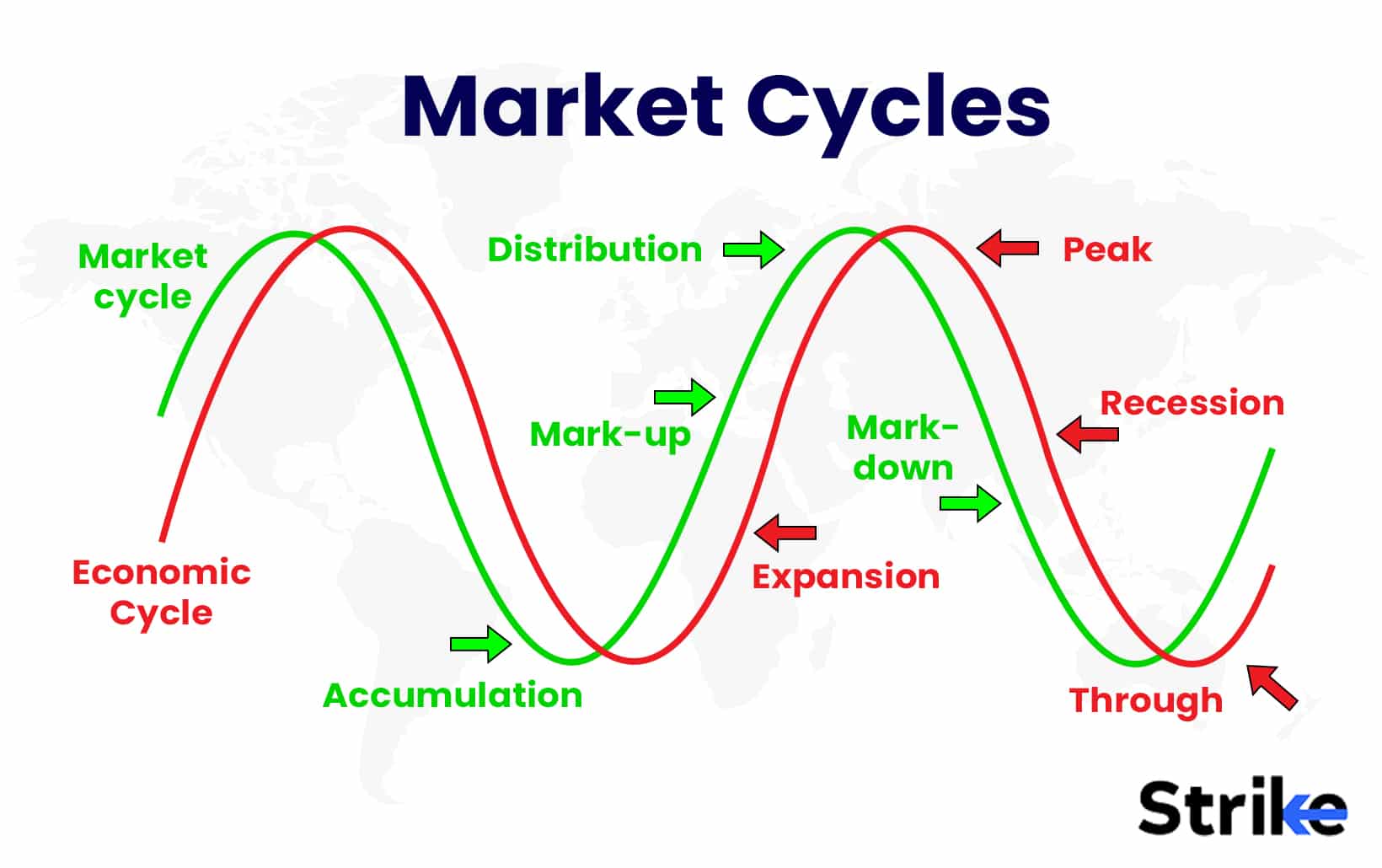
Market cycles refer to the recurring phases that financial markets go through over time. These cycles arise from the natural ebb and flow of investor psychology, economic conditions, and external events. Understanding these phases helps traders anticipate potential price movements rather than reacting blindly.
Market cycles typically consist of four main phases:
-
Accumulation Phase
-
Markup (Uptrend) Phase
-
Distribution Phase
-
Markdown (Downtrend) Phase
Let’s break down each phase:
1. Accumulation Phase
-
Description: This phase occurs after a prolonged downtrend or market bottom. Smart money—like institutional investors and savvy traders—begin to quietly buy assets at low prices, accumulating positions.
-
Market Behavior: Price moves sideways with low volatility as supply and demand balance out. Volume may increase subtly.
-
Trader’s Approach: Look for signs of price stabilization and prepare for an upcoming uptrend.
2. Markup (Uptrend) Phase
-
Description: The accumulation ends, and prices start to rise as demand outpaces supply. This is the classic bullish trend phase.
-
Market Behavior: Higher highs and higher lows on the chart. Momentum and volume increase.
-
Trader’s Approach: Trade with the trend—buy on pullbacks or breakouts to capture the upward momentum.
3. Distribution Phase
-
Description: After a strong uptrend, the market enters a distribution phase where smart money begins to sell or “distribute” their holdings.
-
Market Behavior: Price movement becomes choppy and range-bound near the highs. Volume spikes can occur as supply meets demand.
-
Trader’s Approach: Be cautious. Look for signs of trend reversal or prepare to exit long positions.
4. Markdown (Downtrend) Phase
-
Description: Supply overwhelms demand, leading to declining prices and a bearish trend.
-
Market Behavior: Lower highs and lower lows. Increasing volatility and volume on down moves.
-
Trader’s Approach: Avoid buying against the trend. Consider short trades or stay on the sidelines until signs of accumulation appear again.
Why Trading with the Trend Matters
“The trend is your friend” is a well-known mantra in trading circles—and for good reason. Trading with the trend:
-
Increases probability of success: Trends reflect market consensus and momentum.
-
Reduces emotional stress: It’s psychologically easier to trade with momentum than against it.
-
Aligns with larger market forces: Trading against a strong trend is like swimming upstream.
Many traders fail because they try to pick tops and bottoms instead of riding trends. Mastering market cycles helps you enter trades aligned with market momentum, improving your risk-reward ratio.
How to Identify Market Cycles and Trends
Use Technical Analysis Tools
-
Moving Averages: Help smooth price data to identify trend direction. For example, price above a 50-day moving average often signals an uptrend.
-
Trendlines: Draw support and resistance lines to visualize cycles.
-
Volume Analysis: Rising volume on price advances suggests strong demand.
-
Momentum Indicators: RSI, MACD help gauge the strength and sustainability of trends.
Analyze Price Action Patterns
-
Look for higher highs and higher lows in uptrends.
-
Look for lower highs and lower lows in downtrends.
-
Sideways ranges indicate accumulation or distribution phases.
Fundamental Context
Market cycles are also influenced by economic data, earnings reports, central bank policies, and geopolitical events. Staying informed complements technical analysis.
Practical Strategies to Trade with the Trend
1. Enter on Pullbacks
During an uptrend, prices rarely move straight up. Look for retracements to key support levels (e.g., moving averages, Fibonacci retracements) to enter long positions with lower risk.
2. Breakout Trading
Trade breakouts from consolidation zones during accumulation or distribution phases. Confirm with volume spikes for higher probability.
3. Use Trailing Stops
Protect profits by using trailing stops that move up with the trend, allowing you to ride extended moves while limiting downside risk.
4. Avoid Trading Against the Trend
When in a downtrend, avoid buying unless there are clear reversal signals. Consider short selling or staying flat.
Managing Risk During Market Cycles
Successful traders always emphasize risk management. When trading with the trend:
-
Set clear stop-loss levels below recent swing lows in uptrends.
-
Avoid over-leveraging, especially during volatile phases.
-
Position size based on your risk tolerance and the volatility of the asset.
-
Monitor news that can affect market cycles unexpectedly.
Market Cycles and The5ers Funding Program
For traders aiming to go professional, understanding market cycles is invaluable, especially for proprietary funding programs like The5ers.
How Does The5ers Benefit from Market Cycle Awareness?
-
Consistent Profitability: The5ers looks for traders who can generate steady profits. Trading with the trend during markup phases and avoiding losses in markdown phases improves consistency.
-
Risk Control: Understanding cycles helps you adjust risk parameters—reducing risk in distribution or markdown phases.
-
Strategy Adaptability: Your trading strategy can evolve with cycles, which aligns with The5ers’ expectations for professional risk management.
By combining market cycle knowledge with sound money management, you enhance your chances of passing The5ers evaluation and receiving funded accounts.
Tips to Incorporate Market Cycle Trading into Your Routine
-
Start your day analyzing market conditions: Identify which phase the major markets or instruments you trade are in.
-
Align trades with the dominant trend: Avoid counter-trend trades unless part of a high-probability reversal strategy.
-
Journal your trades: Record which phase you traded in and how your strategy performed.
-
Review and adjust: Use your trading journal to refine entries and exits based on cycle phases.
Conclusion
Market cycles are a natural rhythm of financial markets driven by investor psychology and economic forces. Learning to identify these cycles and trade with the trend can transform your trading from guesswork into a strategic and disciplined approach.
Whether you are a day trader, swing trader, or position trader, recognizing where the market is in its cycle helps you align with momentum, reduce risk, and improve profitability.
If you’re serious about scaling your trading career, programs like The5ers reward traders who combine technical skills, risk management, and cycle awareness with discipline and consistency.
Start mastering market cycles today — analyze, plan, and trade with the trend to increase your chances of success and potentially get funded by The5ers.
Learn more and get started here: The5ers.com


Informative blog, those who aim to enhance their trading journey with the right guidance and opportunities will find this platform highly valuable. The best prop firm in India provides traders with access to capital, structured programs, and an environment that encourages growth. By focusing on discipline, consistency, and effective risk management, traders can build sustainable results. The fundedfirm approach adds tremendous value, offering financial backing that allows skilled individuals to trade confidently without personal risk. This combination of guidance and opportunity makes it an excellent choice for anyone aiming to achieve success in the trading world. Visit us for more information.
ReplyDeleteExcellent breakdown of market cycles! Your analysis of accumulation, distribution, and trend phases offers great clarity for navigating and timing trades effectively. For traders in India seeking structured funding pathways to put these concepts into action, I highly recommend checking out Best prop firms in India. They offer fair profit-sharing, transparent evaluation rules, and mentorship—helping traders build consistency and discipline aligned with market cycles. Thanks for sharing such useful insights!
ReplyDeleteInsightful overview of UAE forex brokers—especially helpful with the zero-deposit angle! For those exploring funding alternatives, you might find this link on Best prop firms in India quite useful.
ReplyDeleteClear and insightful guide on navigating market cycles—really valuable for traders at any level! For those exploring funding options, you might also find this resource on Best prop firms in India quite helpful.
ReplyDeleteInsightful breakdown of market cycles—understanding these patterns is truly key to long-term success. For traders seeking to amplify their strategies with reliable capital support, check out Best prop firms in India—excellent options worth exploring.
ReplyDeleteVery informative content! It really helps traders improve their strategies. I recently explored a guide on funding your trades and found it extremely practical for boosting trading confidence.
ReplyDeleteAn instant funded account with fast approval helps traders begin trading without delays. A forex funded account gives traders access to professional trading capital and better market opportunities. Instant funded account programs are designed for traders who want quick funding and flexible trading rules. Choosing a reliable instant forex funded account allows traders to grow their strategies and succeed in the competitive forex market.
ReplyDeleteFinding the best prop firm in Myanmar can make a significant difference in a trader’s success. FundedFirm has gained attention for providing traders with access to funded accounts, competitive profit-sharing opportunities, and straightforward evaluation processes. Its trader-focused approach helps individuals develop their skills while managing risk effectively. Whether you are a new trader or an experienced professional, FundedFirm offers a supportive environment to pursue consistent growth and long-term trading goals in the evolving financial markets.
ReplyDelete